
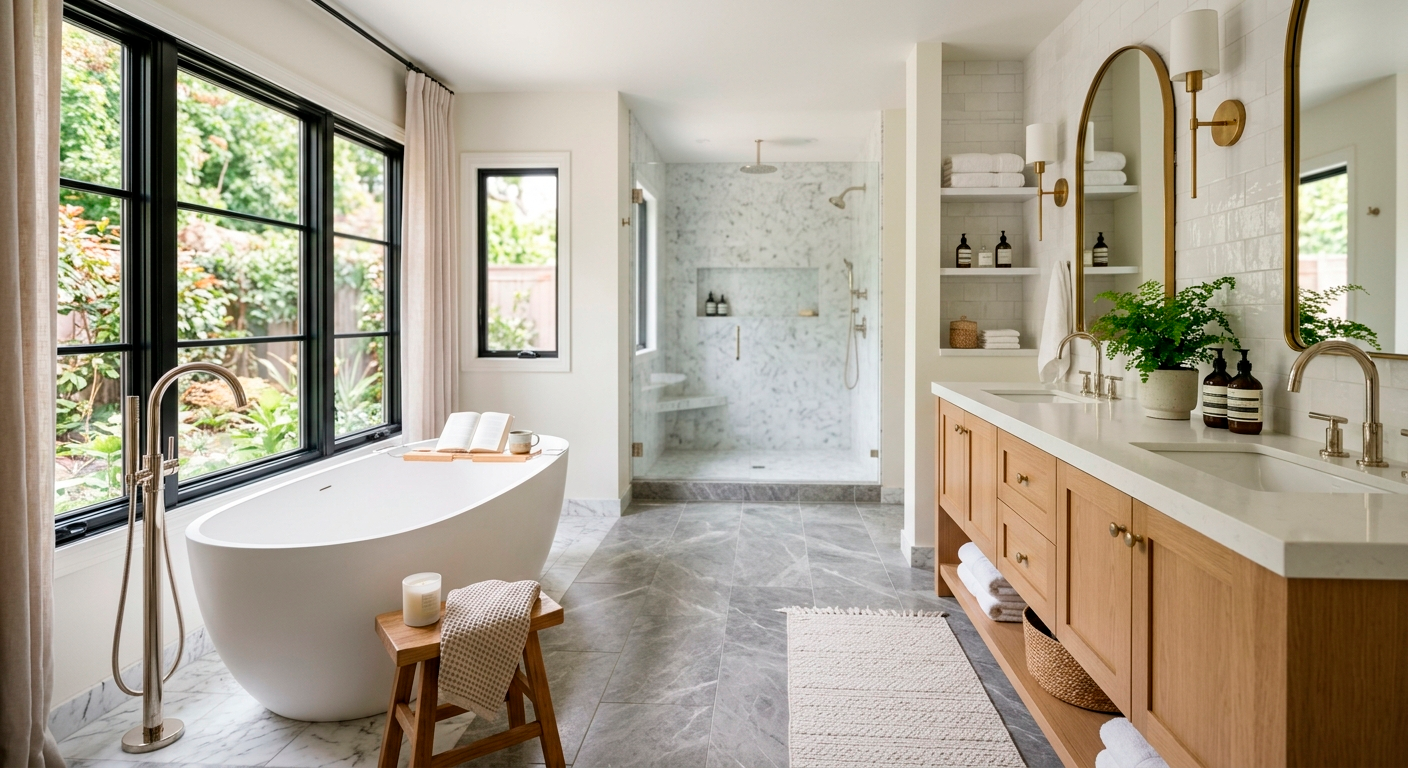
If your master bath still has the original fixtures from 1994, a cramped single vanity, and zero counter space, you’re not alone. For homeowners in Massachusetts suburbs — especially in towns like Acton, Westford, Shrewsbury, and Medfield — the master bathroom is often the last room to get attention, even though it’s the first one you step into every morning.
A thoughtful master bathroom renovation can completely change how your home feels. We’re talking about a space that functions like a hotel suite: quiet, organized, and genuinely relaxing after a long day. If your home is in the 2,000–3,500 sq ft range — which covers a large portion of New England colonials and garrison-style homes — you almost certainly have room to make meaningful upgrades without touching your home’s footprint.
Here are 11 master bathroom ideas worth considering before you pick up the phone and call a contractor.
1. Start with a Realistic Layout Assessment
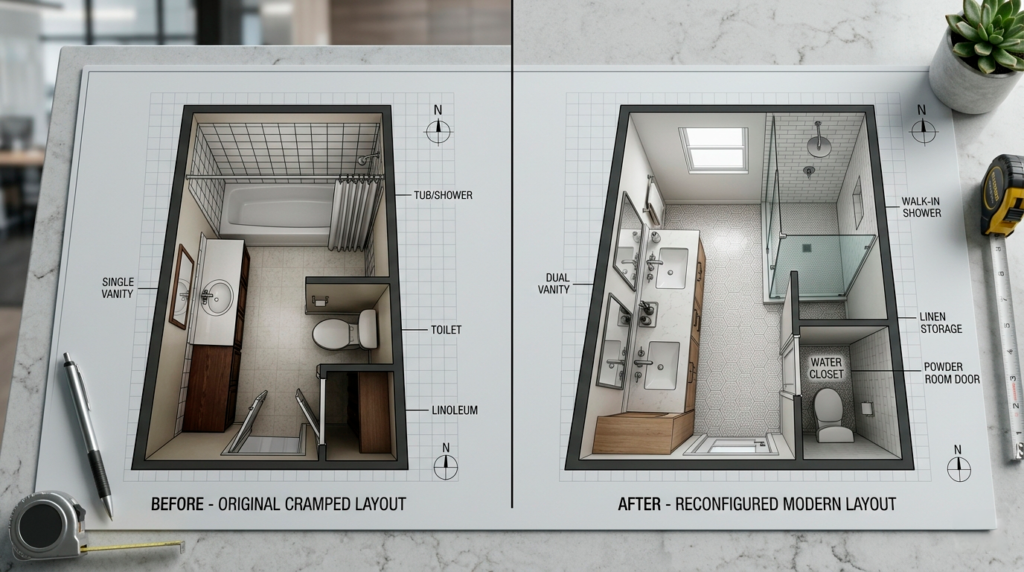
Before getting into finishes and fixtures, look at what you’re working with. Most master baths in suburban MA homes built between 1980 and 2005 land between 80 and 130 sq ft. That’s not huge, but it’s enough to fit a dual vanity, a walk-in shower, and a dedicated toilet zone if the layout is planned right.
If your current bathroom is smaller than 80 sq ft, a bump-out addition can open up serious potential. This is one of the most common master bathroom remodel ideas we work with in Massachusetts, and it tends to have a strong return at resale.
2. Invest in a Dual Vanity
If there’s one upgrade that consistently makes homeowners’ lives easier it’s the dual vanity. Two sinks, separate storage, and enough counter space that two people can actually get ready at the same time without bumping elbows.
For master bathroom design ideas that don’t feel cramped, aim for a minimum of 60 inches of vanity width if you’re going dual. Floating vanities work well in tighter spaces because they visually open up the floor area and make cleaning easier. Choose quartz or quartzite for the countertop — it handles New England humidity better than marble and requires almost no maintenance.
3. Add a Separate Water Closet
This is the move that separates a regular master bath from a true master suite. A separate water closet — a small enclosed room within the bathroom that houses just the toilet — adds privacy and makes sharing the bathroom feel less like a compromise.
You don’t need a lot of space for this. A 36″ x 66″ enclosure with a door is functional. It’s one of the master bathroom ideas that adds genuine comfort during the renovation and real value when it’s time to sell.
4. Connect the Walk-In Closet Directly to the Bath
In many colonial-style homes across Massachusetts, the master closet sits just off the bedroom. Rerouting the entry so the closet connects directly to the bathroom — or at least to both — creates a dedicated dressing room that feels intentional and luxurious without adding square footage.
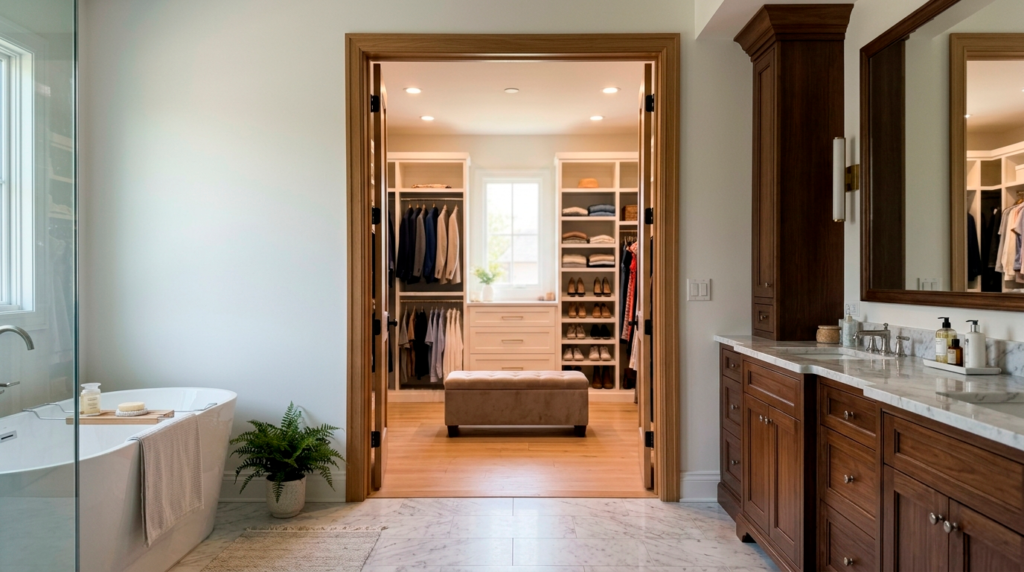
This is especially effective in two-story colonials where the master suite takes up the front or rear corner of the second floor. A simple wall modification can make this happen.
5. Upgrade to a Frameless Walk-In Shower
Frameless glass showers have become the standard in luxury master bathroom ideas — and for good reason. They make the space feel larger, they’re easier to keep clean than framed alternatives, and they photograph beautifully if you’re ever listing the home.
For tile selection inside the shower, large-format porcelain (think 24×48 or even 48×48 slabs) with minimal grout lines reads as modern and upscale. Pair it with a linear drain and a bench, and you have a shower that genuinely feels like a spa.
6. Keep the Soaking Tub or Remove It
Freestanding soaking tubs are a staple in contemporary master bathroom ideas, and they photograph well. The more practical consideration is whether the tub will see regular use. If the answer is no, that floor space is generally better allocated to a larger shower or additional storage.
For those who do want a tub, a freestanding oval or rectangular model centered under a window is the classic choice. One detail worth confirming early: hot water heater capacity. Many homeowners overlook this until after installation.
Thinking about upgrading your master bath before listing your home? It’s worth knowing which renovations actually pay off at resale — and which ones don’t. Here’s what every Massachusetts homeowner should consider before renovating to sell.
7. Layer Your Lighting Properly
Overhead recessed lighting alone isn’t enough. For a master bathroom renovation that feels polished, you need three layers: ambient (recessed), task (sconces flanking the mirror at face height), and accent (toe-kick lighting under the vanity or inside a niche).
Dimmers are non-negotiable. Massachusetts building code requires GFCI protection for all receptacles within 6 feet of a water source — something your contractor will handle, but worth knowing as you plan.
8. Add Heated Floors
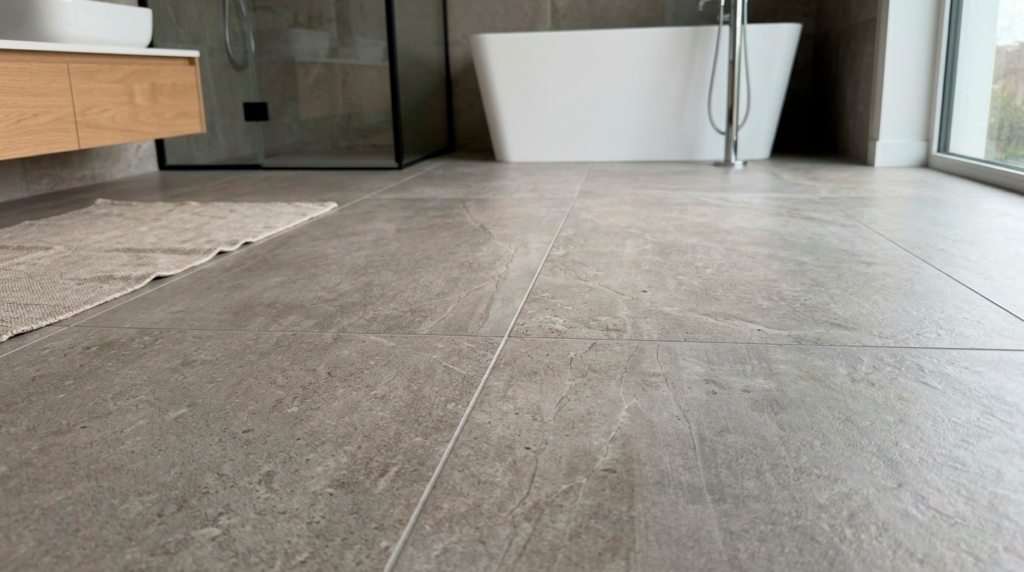
Cold tile floors are a genuine concern in Massachusetts homes from late fall through early spring, which is why radiant floor heating has become a standard feature in well-planned master bathroom renovations. Electric radiant mats are relatively inexpensive to install during a remodel — and significantly more costly to retrofit later — making them one of the upgrades that rewards early planning.
9. Build in Smart Storage
Nothing kills the spa feeling faster than visible clutter. Modern master bathroom design ideas lean heavily on built-in storage: recessed medicine cabinets that flush with the wall, niches in the shower for shampoo and soap, toe drawers beneath the vanity, and tall linen towers that use vertical space.
If your layout allows, a small built-in bench at the entry of a walk-in closet pulls double duty as seating and hidden storage.
10. Choose a Cohesive Color Story
The most elegant master bathroom ideas tend to work within a tight palette — two or three tones at most. In 2026, warm neutrals are dominating: creamy whites, warm greiges, and soft sage greens paired with unlacquered brass or matte black hardware. This combination reads as both modern and timeless, which matters if you’re thinking about resale value in a competitive market like Eastern MA.
11. Hire a Contractor Who Specializes in Residential Remodeling
A master bathroom renovation involves plumbing, electrical, tile work, carpentry, and sometimes structural changes. The difference between a bathroom that feels good and one that just looks okay often comes down to execution.
At Dynamic Home Renovations, we’ve handled master bathroom remodels across Middlesex, Worcester, Norfolk, and Essex counties. Whether you’re reconfiguring an existing layout or planning a full master suite expansion, we’ll walk you through every decision.
If you’re working with a smaller space or a tighter budget, there are solid options that can still make a real difference — from a focused bathroom remodel to upgrading the shower alone. See what’s possible for homes in the Shirley, MA area.
Ready to see what your bathroom could become? Contact us for a free consultation.