
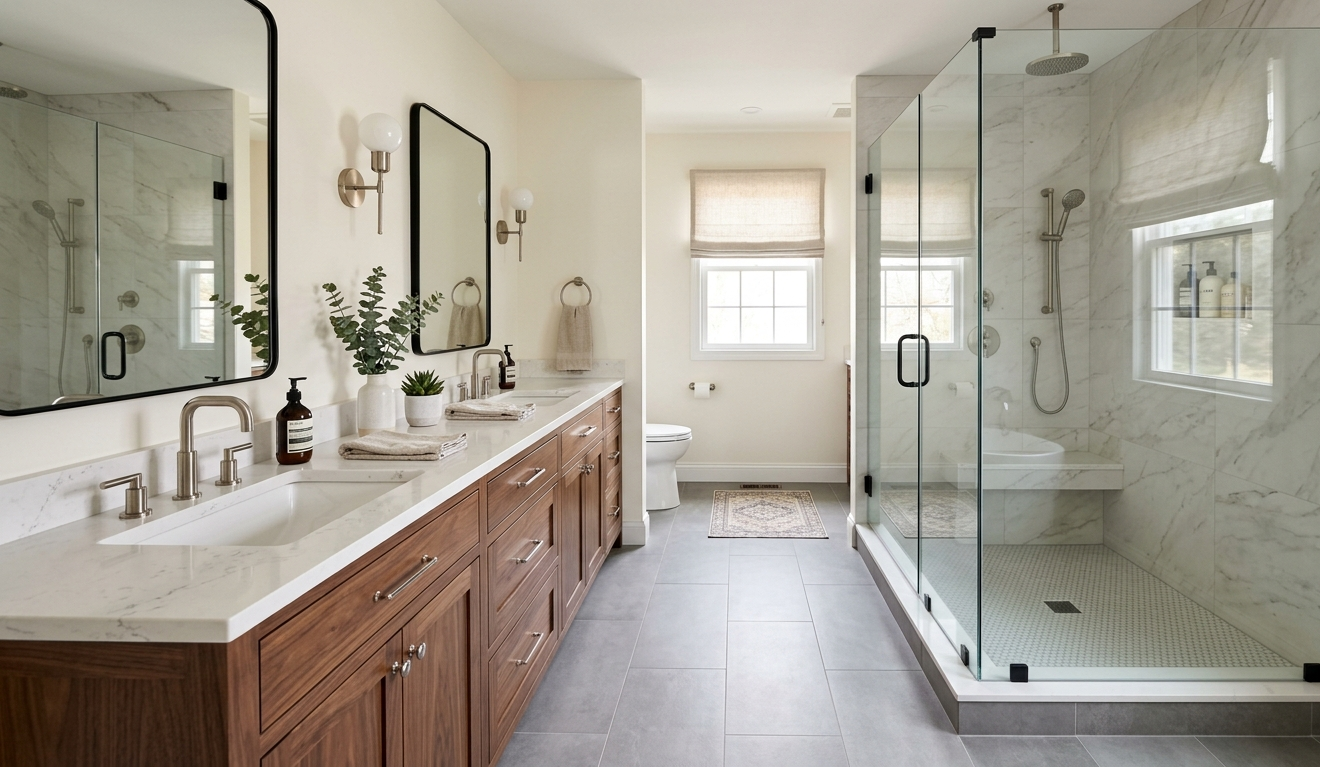
Bathroom remodeling is now the most common home improvement project in the United States. According to the National Association of Home Builders’ 2025 Remodeling Market Index, bathrooms topped kitchens for the first time — with 73% of remodelers rating bathroom projects as common or very common throughout 2025.
For Massachusetts homeowners, the timing has rarely been better. A well-planned bathroom remodel improves daily comfort, modernizes a dated space, and — according to the 2025 Remodeling Cost vs. Value Report — returns up to 90.5% of its cost at resale in New England, the highest figure recorded for this project type in nearly two decades.
So, how much does it cost to remodel a bathroom — and where should your project start?
What Drives Bathroom Redesign Cost?
The bathroom redesign cost depends on several variables: the size of the space, the scope of work, whether plumbing will be relocated, and the materials selected.
A cosmetic refresh — new paint, updated hardware, replacement lighting, and a new faucet — can come in under $5,000. A mid-range bathroom remodel that covers a new vanity, tile flooring, updated fixtures, and a new shower or tub typically falls between $10,000 and $25,000. A full renovation with layout changes, custom tile, a frameless glass shower, or natural stone surfaces can reach $25,000 to $50,000 or more.
According to HomeAdvisor’s 2025 data, the national average bathroom remodel cost is $12,136, with most projects landing between $6,642 and $17,631. The 2025 Houzz Home Study, which surveyed more than 20,000 U.S. homeowners, puts the median spend for a primary bathroom remodel at $13,000.
Here is a general cost breakdown by element:
How Much Does It Cost to Renovate a Bathroom in Massachusetts?
In New England, bathroom renovation costs run slightly higher than the national average due to labor rates and local permitting requirements. The 2025 Cost vs. Value Report places a midrange bathroom remodel at $27,559 in New England, with a return of 90.5% at resale — meaning the bathroom is one of the few interior renovations where homeowners can expect to recover most of their investment when they sell.
That figure reflects a standard scope: new tile floor and shower surround, updated vanity with solid-surface countertop, new toilet, updated lighting and ventilation, and a new shower or tub — without relocating plumbing.
For a small bathroom redesign, the math compresses but doesn’t disappear. Materials cost less in a smaller footprint, but labor doesn’t scale down proportionally. A well-executed small bathroom remodel — even one under 50 square feet — consistently delivers an outsized return relative to its size.
How Long Does a Bathroom Renovation Take?
How long does it take to do a bathroom renovation? The answer depends entirely on scope. A cosmetic-only project — paint, hardware, and fixture swaps — can wrap up in one to five days. A standard full bathroom remodel with new tile, a new vanity, and updated plumbing typically takes three to six weeks once construction begins. Full gut renovations that involve layout changes or plumbing relocation may run six to ten weeks.
At Dynamic Home Renovations, most full bathroom remodels are completed in two to four weeks — at the efficient end of the industry range. For homeowners who need a faster turnaround without compromising the wet area, our one-day bathroom remodel focuses on the shower zone: custom-fitted wall systems measured precisely for your space and installed in a single visit.
How to Choose a Bathroom Remodeling Contractor
Knowing how to hire a contractor for a bathroom remodel matters as much as setting the right budget. The wrong hire can stall timelines, void manufacturer warranties, or create code violations that complicate a future sale.
When evaluating bathroom renovation contractors, verify the following before signing anything:
- License and insurance. In Massachusetts, contractors must hold a valid Home Improvement Contractor (HIC) registration. Request proof of general liability coverage and workers’ compensation.
- Permit handling. A qualified bathroom remodeling contractor pulls permits and schedules inspections.
- Written, itemized estimate. Scope, materials, labor, timeline, and payment schedule should all be documented before work starts. Vague verbal quotes offer no protection.
- Portfolio and references. Ask to see photos of completed bathroom remodels at a similar scope. Follow up with past clients directly.
Knowing how to choose a bathroom remodeling contractor for a smaller space involves an additional layer: finding someone who understands spatial constraints — how to route plumbing efficiently in a tight floor plan, which vanity depths clear code minimums, and which tile formats make a compact bathroom feel larger.
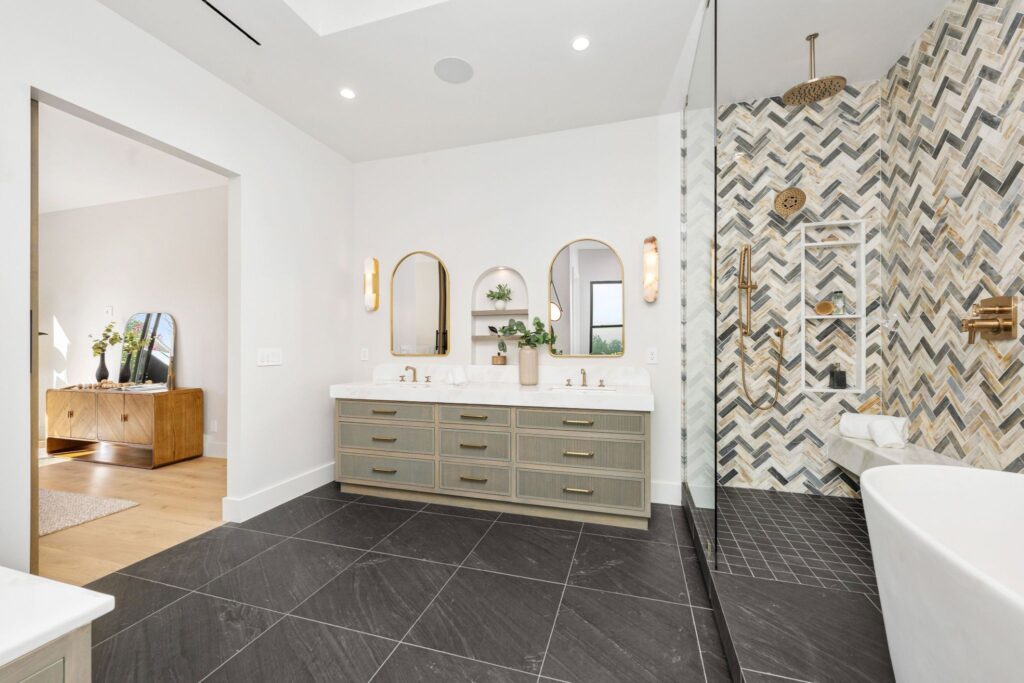
Is a Bathroom Renovation Worth It Right Now?
Bathroom remodeling carries an 80% national ROI on midrange projects — and 90.5% in New England — the strongest performance since before the 2008 recession. Outdated bathrooms reliably slow listings and reduce offers; renovated ones attract buyers faster and support higher sale prices.
Whether the goal is a targeted shower upgrade, a full bathroom redesign, or a complete overhaul of an aging primary bath, the first step is a professional assessment of your specific space and budget.